How to scale Meta ads on a small budget
Aim for enough budget to get 50 conversions a week, which is your CPA times 7, per day. If you're just starting out, $100 per day is the lowest that works. Put it into one CBO scaling campaign with around 20 genuinely different ads, test new ads in a $50 per day ABO ad set, move the winners across after a week, and only ever raise the budget on the CBO.

Manu Verma, founder of Nuver Digital22 October 2026 · 5:14 video · 5 min read
 5:14
Key takeaways
- Minimum budget: your CPA times 7, per day, gets you to 50 conversions a week. $100 per day is the absolute lowest for a brand just starting out.
- One CBO scaling campaign. No separate prospecting and retargeting campaigns at this budget, because every split means less data for each.
- Around 20 ads in the CBO, all genuinely different, about half statics and half videos. Since Andromeda, ads that look alike count as one.
- Plan the ads across four buying stages: trigger, exploration, evaluation and purchase. About five per stage.
- Test new ads in a separate ABO ad set at $50 per day, up to 10 ads at a time. After a week, move the ads Meta spent on that also have a good CPA.
- Raise the CBO budget by about 20% every two to three days. Leave the testing budgets alone.
This is the setup we’d use to grow an ecommerce brand’s Meta ads from a small budget. It’s the same approach we’ve used across more than 300 brands, from their first sale up to 8 figure months.
What’s the minimum Meta ads budget for an ecommerce brand?
Ideally, you want enough budget to get 50 conversions in a week. That gives Meta enough data to work with. The simple way to work it out is to take your CPA and multiply it by 7. That’s your daily budget.
| Your CPA | Daily budget for 50 conversions a week |
|---|---|
| $20 | $140 per day |
| $30 | $210 per day |
| $50 | $350 per day |
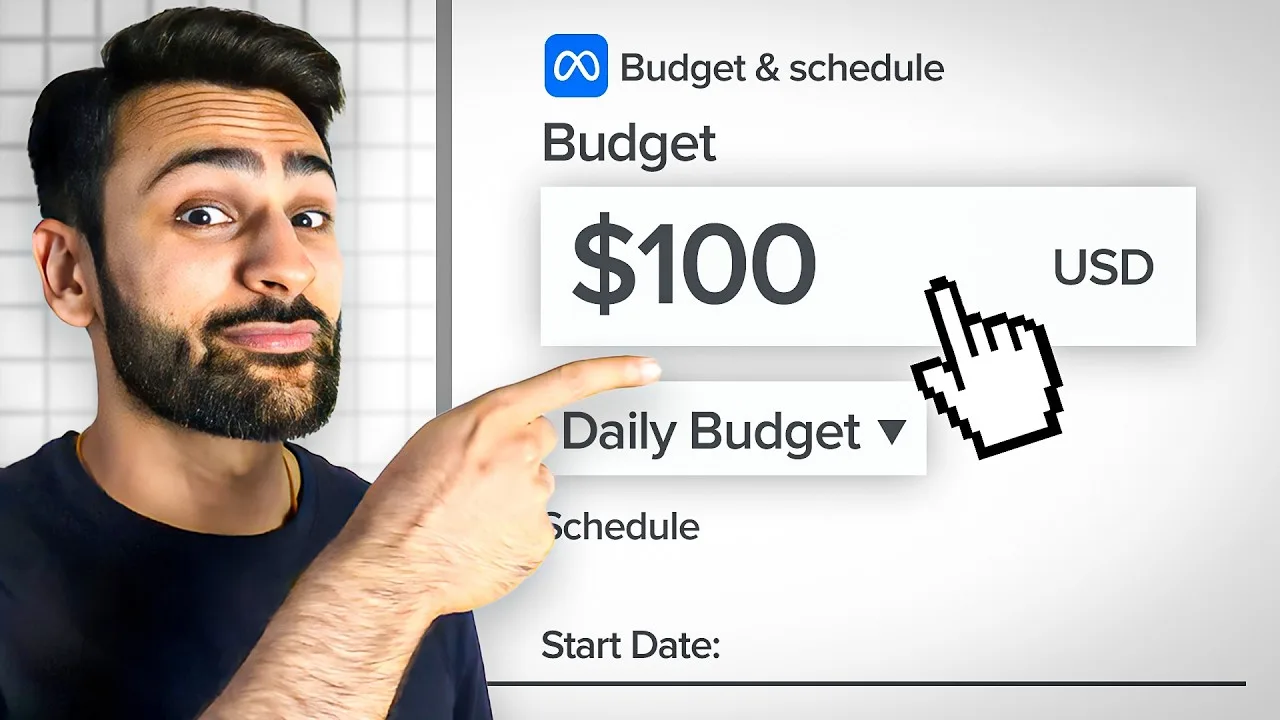
If you’re just starting out and want the absolute lowest number, it’s about $100 per day. That can give you some initial data, and then you move up from there depending on how things go.
That assumes your product sells for less than $100. If it’s higher value, you’ll need to spend more: at least enough for one or two sales per day.
How should you structure a Meta ad account on a small budget?
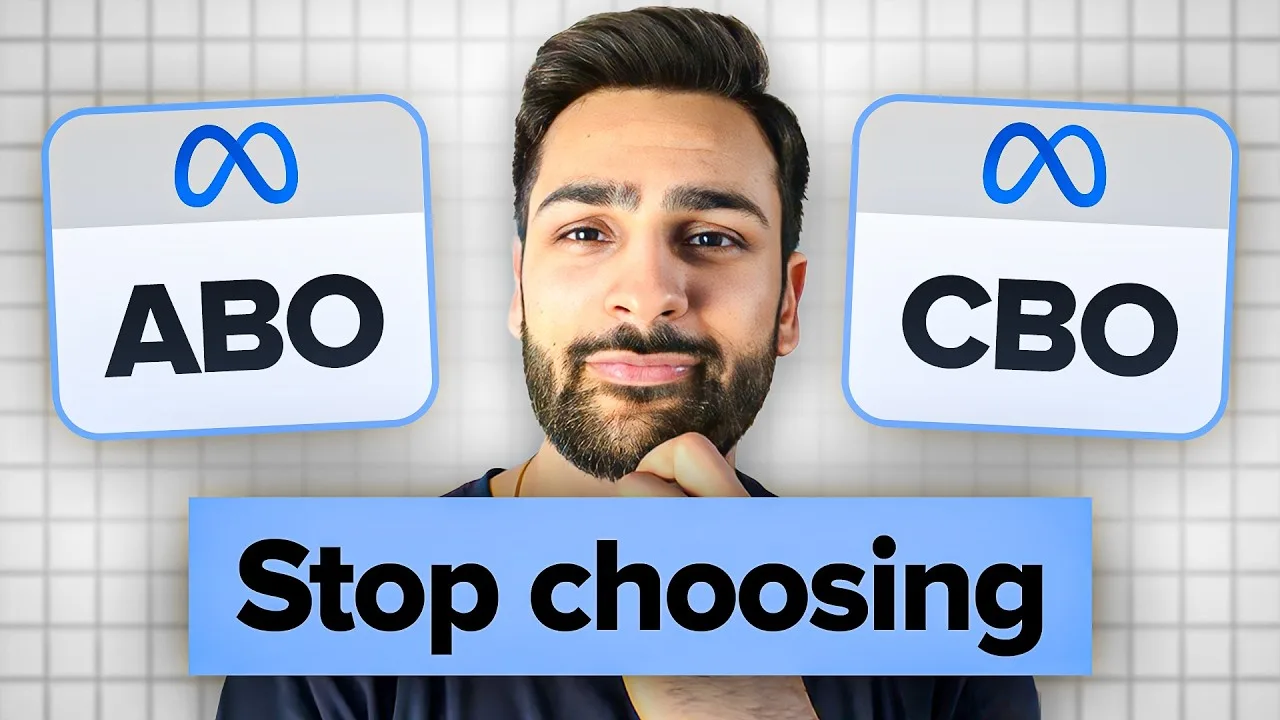
Keep it simple. You have one CBO. That’s your scaling campaign, and everything you’re spending goes into it.
We used to split things out a lot more, with prospecting and retargeting in separate campaigns, and that worked at the time. But Meta is much better now at finding the right person on its own. It’s a billion-dollar algorithm, so let it do what it’s designed to do. And at this budget, every split just means each campaign gets less data.

How many ads do you need, and how different should they be?
What the CBO needs from you is creative. Inside it, aim for around 20 ads, and make them really different from one another.
Since Meta’s Andromeda update, ads that look similar get grouped together. That means 20 versions of the same static isn’t really 20 ads. It’s closer to one. You want:
- Different messages
- Different people
- Different formats, roughly half statics and half videos
How do you plan 20 genuinely different ads?
The best way is to build them around the stages someone goes through before they buy. When we build customer personas for our clients, we break it into four.
- Trigger. The moment the problem becomes real for someone. Say their skin flares up right before a wedding. They’re not looking for you yet, so the ad has to call out the problem before it even gets to the product.
- Exploration. They know they’ve got a problem and they’re researching it. These ads teach them something.
- Evaluation. They already know the category and they’re comparing options. This is where your comparisons, reviews, ingredients, results and guarantees come in.
- Purchase. They’re ready to buy, or they’ve already been to your site, and they need a reason to do it now. That’s your offer, your bundle, your best review.
To plan your 20 ads, aim for around five per stage, with statics and videos in each.

Most of the brands we look at have heaps of evaluation and purchase ads and almost nothing at the trigger stage. That’s usually the lowest hanging fruit.
Which ad formats should you use?
There are a lot of formats you can play around with. For example:
| Video | Static |
|---|---|
| The founder talking straight to camera on their phone | Comparison ad |
| The founder replying to a real comment | Listicle |
| A creator who actually uses the product | Word wall |
| An in-house product demo | Review static |
| A street interview | Carousel |
| An in-store explainer, if you’re in retail |
You don’t need all of them. Pick the ones that suit your brand, spread them across the four stages, and make sure you never have two ads that look and say the same thing.
How do you test new ads without hurting your scaling campaign?
Every time you make new ads, they go into a separate ABO testing campaign: one ad set at $50 per day, with up to 10 ads at a time. Again, mix up the stages and formats as much as you can.
From there, let the algorithm decide where the budget goes. Generally, the ad that gets the most spend in a testing ad set is the one Meta rates as the best performer. It’s basically saying: this is the ad I can scale efficiently.
After a week, look for two signals:
- Has Meta chosen to spend on this ad?
- Does it have a good CPA? Is it one of the top performers in that batch?
If it’s a yes to both, move it into the scaling campaign.
When should you turn a testing ad set off?
You don’t have to turn it off once you’ve moved its winners across. If it’s working well, there’s no reason to. Leave it running, and now you’re at around $150 per day across the account. Then set up a new $50 per day testing ad set with your next batch of ads, and repeat.
Over time, the old testing ad sets will phase out. To decide when to turn one off, look at the ads you moved from it into the scaling campaign. If they’re picking up spend in the CBO, you can turn the testing ad set off with confidence: it’s not performing on its own anymore, and its best ads are already supporting your scaling campaign.
How fast should you increase the budget?
When overall performance is looking good, increase the budget on the CBO only:
- Around 20% every two to three days. No rushed moves, and don’t double it overnight.
- Don’t touch the testing budgets. Leave each ad set where it is. Its job is to find your next winners.
The goal is to get the CBO to the point where it can hit 50 conversions in a week. Once you’re there, keep pushing, and over time give your testing enough budget to hit that as well.
What else decides whether this works?
The structure only works as well as what you put into it: the creative going into each batch, the offer behind it, and whether your tracking is giving Meta clean data.
Once your budget grows, the next step is running testing and scaling side by side properly. That’s the ABO + CBO hybrid framework. And if you’re not sure Meta is seeing all your sales, start with fixing your tracking before you scale.
Questions people ask
What is the minimum daily budget for Meta ads for an ecommerce brand?
Ideally, enough to get 50 conversions a week: take your CPA and multiply it by 7 to get a daily budget. With a $30 CPA, that's around $210 per day. If you're just starting out, $100 per day is the lowest that gives you useful data, as long as your product sells for less than that. Higher priced products need enough for at least one or two sales per day.
Should I run separate prospecting and retargeting campaigns on a small budget?
No. Put everything into one CBO scaling campaign. Meta is now much better at finding the right person on its own, and at a small budget every split just means each campaign gets less data.
How many ads should be in a Meta CBO campaign?
Around 20, and they need to be genuinely different from each other: different messages, different people, different formats, roughly half statics and half videos. Since Meta's Andromeda update, ads that look similar get grouped together, so 20 versions of the same static count as one ad.
How long should I test a new Meta ad before moving it into scaling?
About a week. Then look for two signals: Meta has chosen to spend on the ad, and it has a good CPA compared with the rest of the batch. If it's a yes to both, move it into the scaling campaign.
How fast should I increase my Meta ads budget?
Around 20% every two to three days, on the scaling CBO only. Don't double it overnight, and don't raise the testing budgets, because their job is to find your next winners.

Manu Verma
Founder of Nuver Digital, an ecommerce paid ads agency in Sydney. Close to a decade in paid ads and more than 300 ecommerce brands. On YouTube he breaks down what's working in Meta, Google and TikTok ads, pulled straight from the accounts Nuver manages.