How to structure a Meta ads account for testing and scaling
Consolidate the account into two campaigns with two jobs. A testing campaign with a fixed budget of your target CPA times 7, per day, testing 5 to 10 completely different concepts at a time, and a scaling campaign that holds your proven winners and is the only place you raise the budget, by 20 to 30% every two to three days.

Manu Verma, founder of Nuver Digital22 October 2026 · 4:09 video · 4 min read
 4:09
Key takeaways
- Move away from 15 segmented campaigns. Consolidate into a testing campaign and a scaling campaign, so the algorithm gets more budget and a stronger signal in each.
- Fund testing for 50 conversions a week: your target CPA times 7, per day. At a $125 CPA that's about $875 per day.
- Test 5 to 10 completely different concepts per batch. Variations of the same idea teach you nothing.
- The testing budget never changes. Run each batch for about a week, turn off the losers, keep the winners and add the next batch.
- Raise the budget in the scaling campaign only, by 20 to 30% every two to three days while performance holds. It can hold up to 50 ads.
- Iterations of a proven concept skip testing and go straight into scaling. Judge scaling on ad set CPA, not on each ad.
We’ve restructured all of our Meta ad accounts around this setup, based on direct conversations with our Meta reps and on the live accounts our team manages, which spend hundreds of thousands of dollars per month across ecommerce brands. This is how to structure the account, how to test creative properly, and how to scale the winners.
What’s the best Meta ads account structure in 2026?
The days of running 15 segmented campaigns are done. The algorithm now performs best when you consolidate your budget into fewer campaigns with a stronger signal. We’ve been taking accounts from 15 campaigns down to two or three, and performance has gone up, not down.
The whole system comes down to two campaigns with two jobs:
- A testing campaign, which finds winners on a fixed budget.
- A scaling campaign, which runs your proven winners and is where the budget grows.

Testing comes first, because everything flows from there.
How much budget does a Meta testing campaign need?
The testing campaign has one job: finding winners. To do that, it needs enough budget to get out of the learning phase, and that means 50 conversions a week.
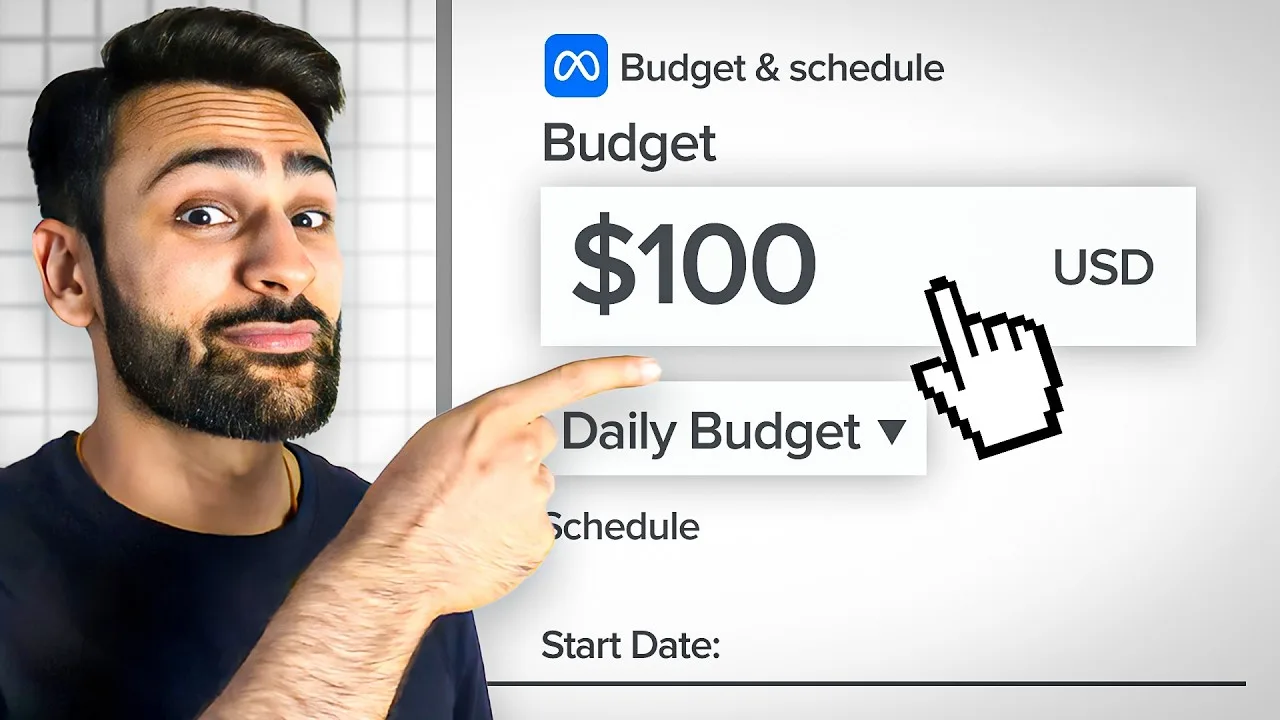
The maths is simple: target CPA × 7. That’s your daily testing budget, enough for around 50 conversions a week.
| Target CPA | Daily testing budget for 50 conversions a week |
|---|---|
| $30 | $210 per day |
| $50 | $350 per day |
| $125 | $875 per day |
If you don’t have that budget, don’t run more ad sets. Run fewer. One properly funded testing ad set beats five starving ones every time.
How many ads should you test at once?
Test 5 to 10 ads per batch, and make every ad a completely different concept. Not variations of each other, and not iterations of your winners. For example:
- A testimonial
- A before and after
- A demo
- A UGC piece
They should all be genuinely distinct, going head to head. If all ten ads look the same, you’ve spent money and learned nothing.
Should you change the testing budget when it’s doing well?
No. The testing budget never changes. You don’t scale it up when it’s doing well, and you don’t cut it when it’s not. It stays fixed, because its job is data, not revenue.
The rhythm is the same every time:
- Run the batch for about a week.
- Turn off the losers.
- Keep the winners live.
- Drop in the next batch of fresh concepts to compete against them.
Then repeat, over and over.
How does the scaling campaign work?
The scaling campaign is where your proven winners go, and it’s the only place you increase the budget: 20 to 30% every two to three days when performance is holding.
It can hold up to 50 ads, and you actually want that variety. Statics, videos, carousels, polished content and scrappy phone footage. Different people respond to different formats, and that mix is what stops the campaign fatiguing. The algorithm rotates through the creative as individual ads wear out.

Do iterations of a winning ad need to be tested?
No. Iterations skip testing. Once a concept has proven itself, variations of it go straight into the scaling campaign. For example:
- The same video with a new three-second hook
- The same script with a different creator
You already know the concept works, so retesting it just slows you down. Testing is for new concepts only.
How do you get the scaling campaign to reach new customers?
This is where minimum spends come in. They’re how you control the algorithm now.
If your scaling ad set keeps hitting the same warm audience and isn’t bringing in new customers, you don’t build a separate exclusions campaign anymore. Instead:
- Duplicate your winners ad set inside the same campaign.
- Put harsh exclusions on the duplicate: past purchasers, website visitors and your email list.
- Set a minimum spend on it.
That forces the algorithm to put real money in front of genuinely new people every day. And because it’s all in one campaign, the ad sets deduplicate instead of competing with each other in the auction.
How should you judge ads in the scaling campaign?
Look at the ad set level CPA, not each individual ad.
Some ads look expensive on their own, but they’re doing the assist work: bringing people in who convert through another ad later. If the ad set is hitting target, leave the ads alone. Just clean out anything getting zero spend every week or two.
What else decides whether this works?
This structure is one piece of the puzzle. You still need a creative pipeline feeding it fresh concepts every week, an offer that converts, and attribution you can actually trust.
If your account’s results swing from week to week, start with fixing inconsistent Meta ads performance. For a closer look at running ABO testing alongside CBO scaling, see the ABO + CBO hybrid framework. And if you can’t trust what Meta is reporting, fix your tracking before you scale.
Questions people ask
How much budget does a Meta ads testing campaign need?
Enough to get out of the learning phase, which means 50 conversions a week. Take your target CPA and multiply it by 7 to get a daily budget. With a $125 CPA, that's about $875 per day. If you can't fund that, run fewer testing ad sets, not more.
How many ads should you test at once on Meta?
5 to 10 per batch, and every one should be a completely different concept: a testimonial, a before and after, a demo, a UGC piece. Not variations of each other and not iterations of your winners.
Should you increase the budget of a testing campaign when it's performing well?
No. The testing budget stays fixed whether it's doing well or not, because its job is data, not revenue. The scaling campaign is the only place the budget goes up.
How fast should you scale a Meta ads campaign?
By 20 to 30% every two to three days, in the scaling campaign only, and only while performance is holding.
Should new iterations of a winning ad be tested first?
No. Once a concept has proven itself, variations of it, like the same video with a new three-second hook or the same script with a different creator, go straight into the scaling campaign. Testing is for new concepts only.

Manu Verma
Founder of Nuver Digital, an ecommerce paid ads agency in Sydney. Close to a decade in paid ads and more than 300 ecommerce brands. On YouTube he breaks down what's working in Meta, Google and TikTok ads, pulled straight from the accounts Nuver manages.