The Meta ads campaign structure we use for $1M+ a month brands
How we structure Meta ads at $1M+ a month: one main CBO, new ads tested as ad sets inside it, and value rules to reach new customers.

Manu Verma, founder of Nuver Digital11 November 2026
 5:24
The short answer
Run one or two main CBO campaigns instead of separate campaigns for prospecting, retargeting and every audience. Keep one ad set of proven ads untouched, launch each new batch of ads as its own ad set with a minimum spend of around 5 to 10% of the budget, and consolidate older batches over time. Use value rules to bid more for new customers or less for existing ones, and judge the result on how much spend reaches new customers, not on the ROAS in Ads Manager.
Key takeaways
- Most brands we run ads for at over $1 million a month are on one or two main campaigns. Splitting further means less data per campaign and bidding against yourself.
- One CBO with a few ad sets. Each ad set needs around 50 conversions a week, so your budget decides how many it can carry.
- Keep one ad set of proven ads and leave it alone. Every new batch of ads goes into the main campaign as its own ad set.
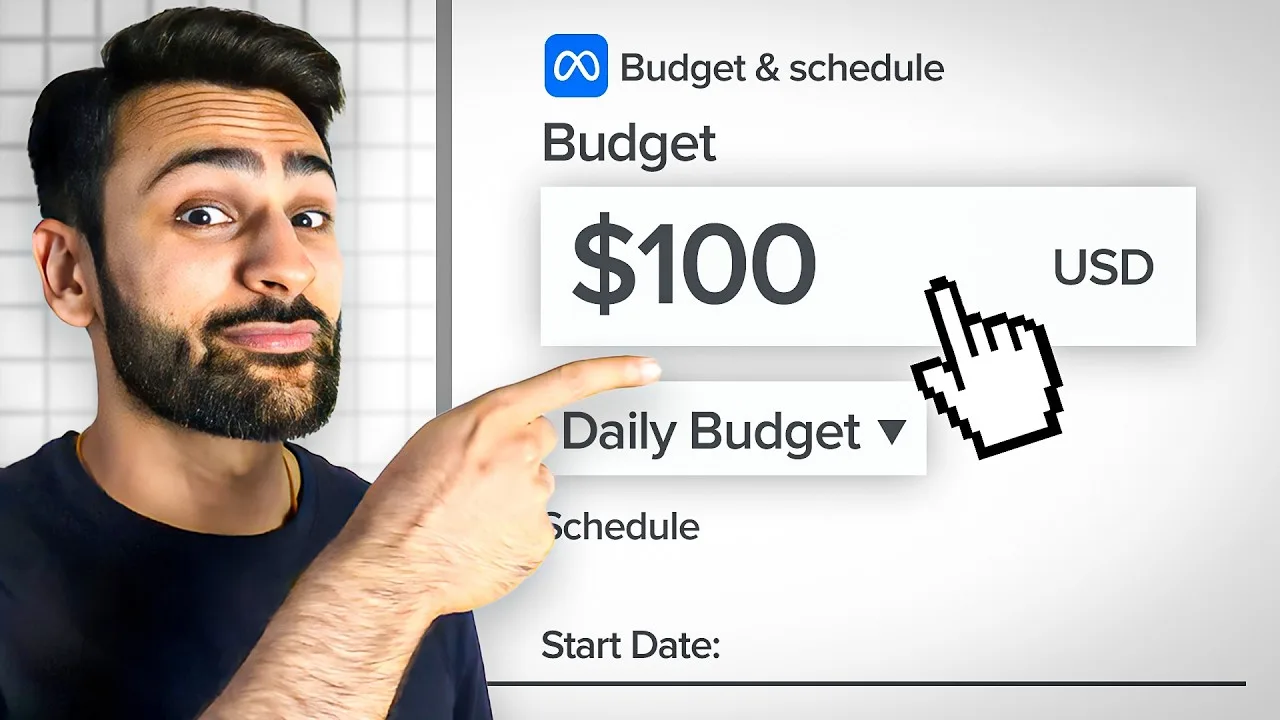
- Give each new batch a minimum spend of around 5 to 10% of the campaign budget, and raise it if the batch is beating your main ad set.
- Use value rules to bid more for new audiences or less for existing customers. In a main campaign, aim for at least 50 to 60% of spend on new audiences.
- Your ROAS in Ads Manager may drop when you do this. Judge it on how much spend reaches new customers and whether the business is growing.
Most of the brands we run ads for at over $1 million a month are on one or two main campaigns on Meta. You might split by country, or give products at very different price points their own campaign, and that makes sense. But a lot of the accounts we look at go much further, with separate campaigns for prospecting, retargeting and every audience they want to test, and it’s holding them back.
Usually the reason brands split things up is control. When everything’s in one campaign, it’s hard to tell who your budget is going to. Is it finding new customers, or mostly selling to people who’ve already bought from you? You don’t need extra campaigns for that anymore. You can control who you reach, and how your new ads get tested, inside the one campaign.
Why run fewer Meta campaigns?
Meta needs data to find buyers, and every time you split your budget, each campaign gets less of it. On one account we found around 40% audience overlap across its campaigns.
I used to think Meta stopped your own campaigns from competing for the same people. It doesn’t. You end up bidding against yourself.
How do you set up one main Meta campaign?
One CBO as the main campaign, with a few ad sets inside it. How many depends on your budget, because each ad set needs around 50 conversions a week to perform properly. Two ad sets means roughly 100 a week, three means 150, and for a brand doing $1 million a month that’s usually achievable.
In budget terms, 50 conversions a week is about your CPA × 7 per day for each ad set. If you want the exact maths: it’s your CPA × 50 ÷ 7, about CPA × 7.1. Rounding down to × 7 gets you 49 a week, which is close enough.

How do you test new ads inside the main campaign?
We use more than one ad set because of testing. Meta learns at the ad set level, so if you keep adding or changing ads in an ad set that’s working, you can knock it back into learning. You don’t want to touch your proven ads.
So we usually have one ad set with our best performing ads that we leave alone, and a separate ad set for each new batch we’re testing. When a new batch is ready, it goes straight into the main campaign as its own ad set, and launching it doesn’t affect the ad sets already running.
We used to test in a separate campaign and move the winners across. That worked at the time, but every move disrupts things, and it can take a day or two to settle. Now, if a new ad set performs, the algorithm just puts more budget behind it.
You can keep adding new ads to a new ad set until it starts performing. Once it’s doing well, leave it alone and start the next batch in a new ad set. Over time you’ll end up with too many ad sets, and that’s when you consolidate: take the best ads from the older batches, put them into one ad set, and turn the rest off.
How do you control the budget between ad sets?
With minimum and maximum spends. The algorithm is always going to favour the ad set that’s already working, and it won’t spend much on fresh ads unless it has to.
- Minimum: to get real data on a new batch, we put a minimum of around 5 to 10% of the campaign budget on it. Sometimes you’ll find a new batch is performing better than your main ad set while the algorithm still isn’t giving it much budget. That’s when you raise the minimum.
- Maximum: if you’re happy for an ad set to spend freely but want to cap how far it goes, set a maximum as well.
Between the two, you can manage budget across ad sets almost the same way you would with separate campaigns.
How do value rules control who Meta reaches?
Before you can use value rules properly, you need to tell Meta who your audiences are. In your advertising settings, define your engaged audience and your existing customers. We set them up as:
- Engaged audience: 180-day website visitors, plus your full Klaviyo email list.
- Existing customers: your Klaviyo purchaser list, plus 730-day pixel purchasers.
Once that’s done, you can break your campaign down by audience segment in Ads Manager and see how much is going to new, engaged and existing customers. A lot of accounts get a surprise when they look. We had one ad set with past purchasers excluded that was still spending only 30% on new people and 70% on engaged audiences. In a main campaign, I want at least 50 to 60% going to new audiences for long-term growth.
A value rule tells Meta that some people are worth more to you than others. You can bid up to 1,000% more for a group, or up to 90% less. If the campaign is spending too much on existing customers or engaged audiences, bid higher for new audiences or lower for existing customers, and Meta shifts the budget accordingly. You can do the same with regions, age groups and devices.

Do you still need exclusions?
We still use them, just as a default across the campaign. If your customers usually reorder within two or three months, and you’d consider them lapsed after that, a 90-day purchaser exclusion makes sense. Beyond that window, it’s fine for Meta to go after them, because winning people back is still good for the business. The value rules then decide how much it’s willing to pay for them.
Even with that exclusion in, a brand that’s been running for a few years can still end up with a lot of spend going to past buyers. We saw this with a coffee subscription brand we work with: around 40% of spend was going to existing customers, mostly people who’d bought four or five months earlier, just outside the 90 days. We added a value rule bidding 20% more for new audiences, and that share dropped to about 10%.
Why might your ROAS drop after adding a value rule?
Your ROAS in Ads Manager might go down. Meta warns you about this when you set up a value rule, and it makes sense: new customers cost more to reach than people who already know you.
That’s the trade-off you want. You’re paying to bring in new customers, and that’s what grows a brand over the long term, rather than constantly showing ads to lapsed customers. So don’t judge a value rule on the ROAS in Ads Manager. Look at whether more of your spend is reaching new customers, and whether the business overall is growing. To see that properly, you need tracking you can trust: start with why ad platforms miss your sales, and how first-party tracking fixes it.
The setup, in short
- One or two main campaigns.
- A proven ad set you leave alone.
- Each new batch launched as its own ad set, with a minimum spend.
- Older batches consolidated over time.
- Value rules controlling who you’re reaching.
Questions people ask
How many Meta campaigns should an ecommerce brand run?
Most of the brands we run ads for at over $1 million a month are on one or two main campaigns. Splitting by country, or giving products at very different price points their own campaign, can make sense. Separate campaigns for prospecting, retargeting and every audience you want to test usually hold an account back, because each one gets less data and they end up bidding against each other.
How do you test new Meta ads without a separate testing campaign?
Launch each new batch as its own ad set inside the main CBO, next to an ad set of proven ads you leave alone. Give the new ad set a minimum spend of around 5 to 10% of the campaign budget so it gets real data. If it performs, the algorithm puts more budget behind it, without the disruption of moving winners from one campaign to another.
How many ad sets can one Meta campaign carry?
It depends on your budget, because each ad set needs around 50 conversions a week to perform properly. Two ad sets means roughly 100 conversions a week, three means about 150. For a brand doing $1 million a month, that's usually achievable.
What are value rules in Meta ads?
A value rule tells Meta that some people are worth more to you than others. You can bid up to 1,000% more for a group, or up to 90% less. If a campaign is spending too much on existing customers or engaged audiences, you can bid higher for new audiences or lower for existing customers, and Meta shifts the budget. You can do the same with regions, age groups and devices.
How do you set up the engaged audience and existing customers in Meta?
In your advertising settings. We set the engaged audience as 180-day website visitors plus the full Klaviyo email list, and existing customers as the Klaviyo purchaser list plus 730-day pixel purchasers. Then you can break a campaign down by audience segment in Ads Manager and see how much spend goes to new, engaged and existing customers.
Why did my ROAS drop after adding a value rule?
Because new customers cost more to reach than people who already know you, and Meta warns you about this when you set one up. That's the trade-off you want: you're paying to bring in new customers, which is what grows a brand. Judge the rule on whether more of your spend is reaching new customers and whether the business is growing, not on the ROAS in Ads Manager.
Want us to run this for you?
This is how we run the ads for the brands we work with. Tell us where your account is at, and we'll get back to you within one business day.

Founder of Nuver Digital, an ecommerce paid ads agency in Sydney. Close to a decade in paid ads and 300+ ecommerce brands. On YouTube he breaks down what's working in the accounts we run.