 Since 2023
SCALING A GLOBAL BRAND ONLINE AND IN STORE
28xGrowth in monthly Meta spend
Up to 9.7xOnline revenue for every ad dollar

We set up first-party data tracking and attribution for ecommerce brands, so you know exactly which ads are driving your orders. One tracking setup you own feeds Meta, Google, TikTok and Klaviyo, a live dashboard is checked against your Shopify sales, and every campaign is judged on your real margins. It's for Shopify brands running paid ads who can't trust what the platforms report.
A first-party setup on a subdomain of your website collects the data once and sends it to Meta, Google, TikTok and Klaviyo.
Your server sends sales straight to the platforms, so far fewer of them get blocked by browsers, ad blockers and privacy settings.
First click, last click and the touches in between, across different time windows, so every ad is judged on the role it plays.
Spend, revenue and orders checked against your Shopify sales, with targets worked out from your margins.
You'll see what changed, why, and what it did to the results.
More of your sales data goes back to the platforms. It's collected first-party on your own domain and never shared with other brands.
You’ll know exactly which ads are driving your orders. We set up first-party data tracking and attribution, with a live dashboard checked against your Shopify sales, and then run your ads off it every day.
Ecommerce brands, usually on Shopify, running paid ads on Meta, Google or TikTok, where any of this sounds familiar:
We set up the full first-party infrastructure, with server-side tracking, for every brand we work with.
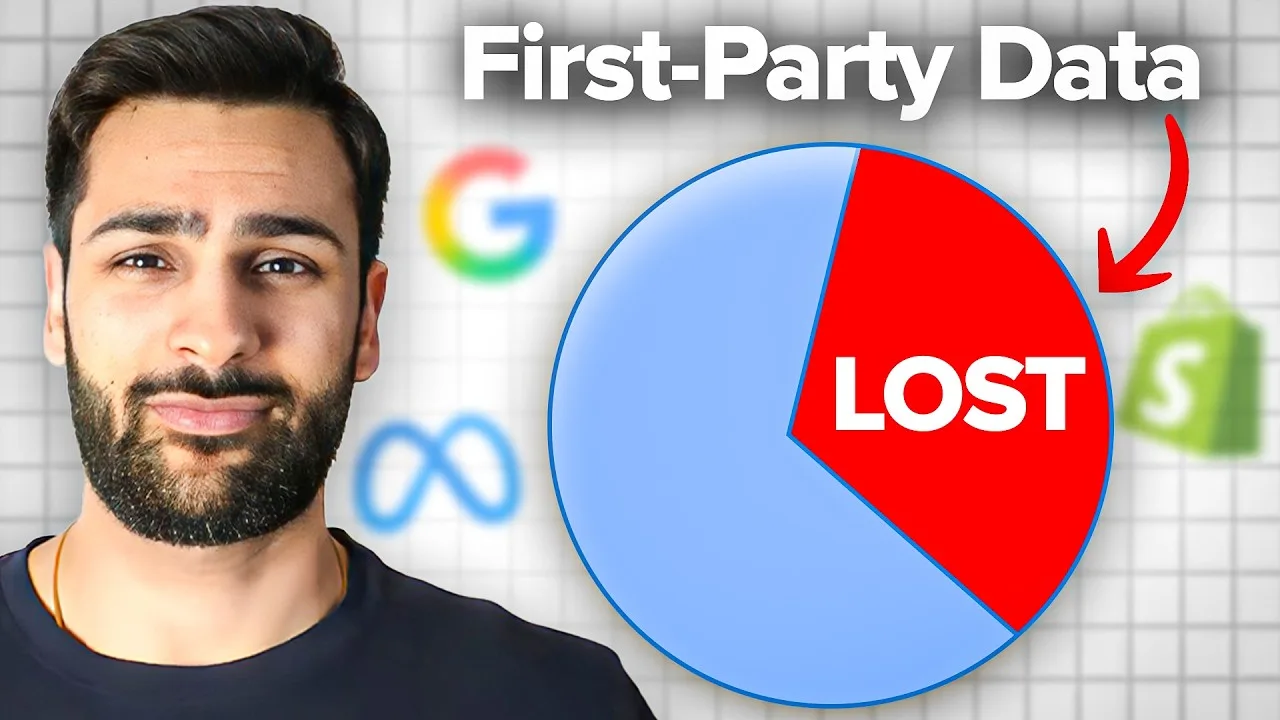
Every ad platform puts its own pixel in your customer’s browser, and the browser no longer trusts them. iOS privacy settings block them, ad blockers kill them and Safari wipes their cookies. Often 20 to 30% of your conversions never make it back to the platforms, and every sale Meta doesn’t see is a sale it can’t learn from.
We’ve written the whole problem up in why ad platforms miss your sales, and how first-party tracking fixes it. This page is about what we set up and what you get from it.
The setup is fairly technical: records on your domain, and your store, ad accounts and email platform connected. We work directly with the tracking platforms and have agency deals with them.
We read performance in three layers, because each one answers a different question:
| Layer | What it tells us |
|---|---|
| The ad platform’s own reporting | What the algorithm is learning from. An optimisation signal, not a verdict. |
| Shopify last-click UTMs | Which campaign closed each sale. |
| First-party attribution | The full journey, including the ads that brought people in. |
Most customers click more than one ad before they buy, often across several days and more than one channel. We match each order back to every paid click that led to it: the first click that brought them in, the last one before they bought, and the ones in between. The same customer is recognised across browsers and devices once they log in or enter their email, and we pick up orders the platforms miss, like a purchase made after tapping an ad inside the Instagram app.
That’s how we tell an ad that opens (brings new people in, converts later through another ad) from one that closes. Cut an opener because it looks weak on last click, and you’ve switched off the tap that fills the funnel.
Every campaign is measured on profit, against your real margins rather than the platform’s own ROAS. We also check what each platform claims against your actual revenue, platform by platform, so when results drop we can tell whether the business fell or the tracking did. Each week you see what changed, why, and what it did to the results.
First-party data and attribution sit underneath the work on these accounts, alongside the ads, creative and testing:
We don’t install tracking and walk away. We run your ads off it every day, so the data drives real budget and creative decisions. More of your sales data goes back to Meta, Google, TikTok and Klaviyo, and the data stays yours.
Tracking is the foundation, not the whole game. It pays off when it feeds well-run Meta ads and Google ads, and when you can test landing pages and see which one actually wins.
Since 2023
 Since 2025

 Since 2022

 Since 2024
It replaces each ad platform's separate pixel with one tracking setup that you own, running on a subdomain of your website. It collects the data once and sends it to Meta, Google, TikTok and Klaviyo. Because it belongs to your website, browsers and ad blockers stop it far less often than the platform pixels, and because you own the data you can follow the full customer journey, not just the last click.
It's what closes most of the gap. Browser to platform reporting can be blocked by iOS privacy settings, ad blockers and Safari; server to server pretty much can't. The platforms go from seeing maybe 70% of your sales to close to all of them. We set up the full first-party infrastructure, with server-side tracking, for every brand we work with.
Usually, and fairly quickly, because the algorithm finally has the full picture of your sales to learn from, and scaling gets more stable too. But tracking is the foundation, not the whole game. You still need creative that converts, a strong offer and a campaign structure that tests and scales properly.
We match each Shopify order back to every paid click that led to it, across Meta, Google and TikTok: the first click that brought the customer in, the last one before they bought, and the ones in between. The same customer is recognised across browsers and devices once they log in or enter their email. It shows which ads start journeys and which ones close them, so an ad isn't switched off just because it rarely gets the last click.
Neither on its own. We read three layers. The ad platform's own reporting is an optimisation signal for the algorithm, not a verdict. Shopify's last-click UTM data shows which campaign closed each sale. First-party attribution shows the full journey, including the ads that bring people in but don't get the last click. Decisions get made when the layers are read together, and checked against your real margins.
Tell us about your brand and where you want to take it. We'll look at your ads and your numbers, and come back with where we'd start.